


When you drive through the beautiful Renaissance villages of Alsace with their romantic farmsteads, you often imagine yourself in Germany. Not so strange, because for years this area was German. The fresh wines that are made in this famous French region sometimes remind you of good German wines.
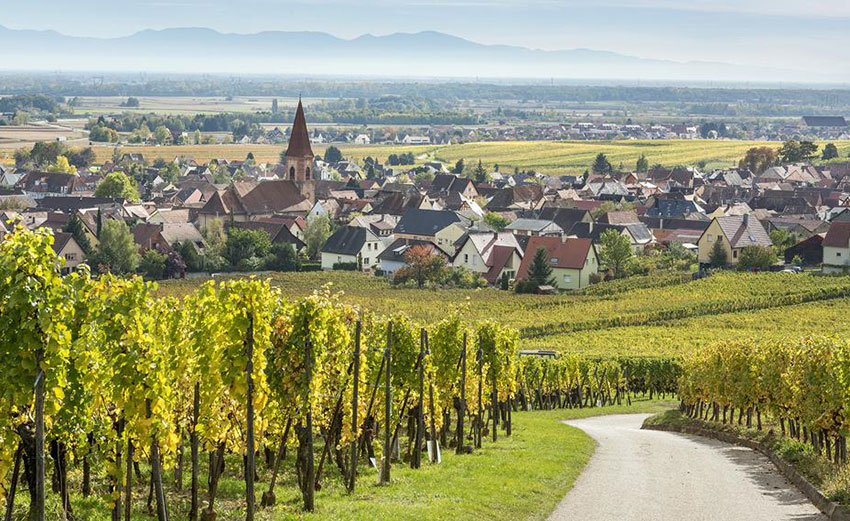
When you drive through the beautiful Renaissance villages of Alsace with their romantic farmsteads, you often feel like you are in Germany. Not so strange, because this area was German for many years. The fresh wines that are made in this famous French region are also sometimes reminiscent of good German wines.
Alsace is a fascinating wine region with different types and styles of wine, often of high quality. Thanks to the shelter of the Vosges and the Black Forest, this northern, elongated valley along the Rhine is still suitable for wine growing.
Most grapes are bought by Négociants (traders) and Cooperatives. They make reasonable to sometimes excellent wines from them. A limited, but growing number of winegrowers make their own wine from their own grapes. These are often the most interesting Alsatian wines.
Riesling, Pinot Gris, Gewürztraminer and Muscat à Petits Grains are considered the 'four noble grapes' of Alsace. Only these grapes may be used to make a Grand Cru. But of course they must come from an excellent, legally designated vineyard. Because the soil composition in Alsace varies enormously. From gravel, limestone and granite to slate, clay and even volcanic rock. You can taste these differences in the various Grand Crus from Alsace.
In addition to the 'noble four', Pinot Blanc, Sylvaner, Savagnin Rose and Pinot Noir are also planted. The latter is the only red grape from Alsace. In the past, light red wines were mainly made from it, which tasted better when they came out of the fridge. Nowadays, richer, more concentrated Pinot Noirs are made in Alsace, which can be compared to a fine Burgundy.
Sparkling Crémants d’Alsace are on the rise. They have been legally recognised since 1976 and are made in the same way as Champagne. Crémants are usually made from Pinot Blanc, Pinot Gris or Sylvaner. Occasionally from Chardonnay. Only a Crémant may be made from this grape in Alsace. For their sparkling rosé, the winemakers naturally use Pinot Noir - the only blue grape in the region.
Sweet Alsatians are also popular. If the winemaker has put Vendange Tardive on the label, you are dealing with a sweet wine that can be compared to a German Spätlese or Auslese. If the label says Sélection de Grains Nobles, you have a noble sweet wine in your hands.


 Orange wine (27)
 Fresh (92)
 Light (40)
 Rosé (8)
 Aromatic (21)
 Medium (98)
 Sparkling (21)
 Ripe (71)
 Full-bodied (99)