


The Spanish wine region of Aragón is located in the northeast of the country. From the Pyrenees to Central Spain. The north is green. In the South, winemakers have to deal with short hot summers and cold winters. The wines from Aragón are on the rise. Especially thanks to the inventive winemakers from northern Somontana.
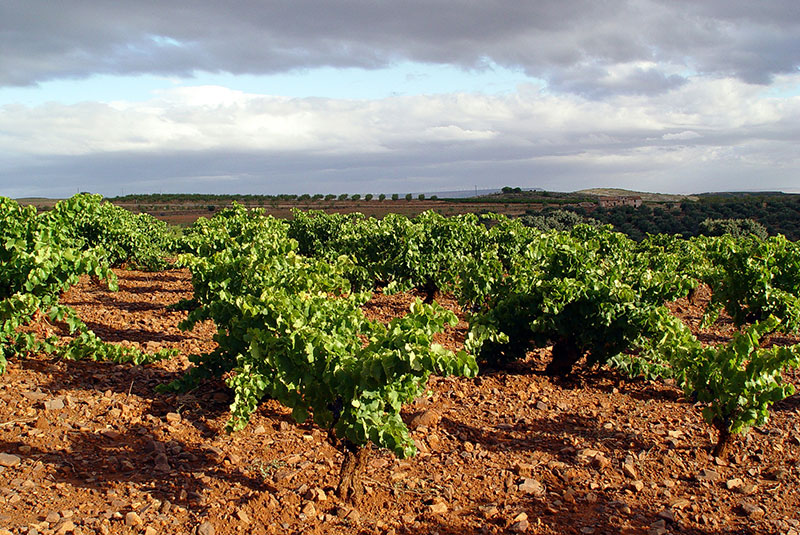
Aragón has four different DOs (Denominación de Origen). Most of the wine made there is red and quite strong. But fresh 'rosados' and crisp white wines from Aragon have been no exception for years.
The wines from Somontano belong to the top of Aragón, in fact: to the top of Spain. This has everything to do with the ambitions of the innovative winemakers. Barely 30 years ago, only mass production took place. Since then, the steep terrace vineyards have been planted with high-quality grape varieties and have been considerably professionalized.
Between 20 and 30 wine companies are active there. The best known are Bodegas Pirineos and Enate - the latter is a decent house wine in many Dutch restaurants. These Bodegas make fresh white wines from Macabeo, Alcañon and Garnacha Blanca, which they like to mix with Chardonnay or Chenin Blanc. Red mainly comes from the local Moristel and Parraleta and the better known Tempranillo and Garnacha. And they then mix that with Cabernet Sauvignon, Merlot and even Pinot Noir.
Somontano's international successes are attracting more and more progressive winemakers. The region will undoubtedly increasingly make itself heard in the coming years as the 'New World of Spain'.
The DO Campo de Borja is named after the famous Spanish Borgias family, who 'delivered' several popes in the Middle Ages. It is no coincidence that monks managed the vineyards for centuries. The grapes have to work hard in the harsh, continental climate and deliver concentrated juice. Mostly red and powerful, from Garnacha, Tempranillo, Mazuela (Carginan) and Cabernet Sauvignon. For white they mainly use Viura and Moscatel.
Calatayud mainly supplies simple rosé and honest red wine. Mostly from Tempranillo, Garnacha and Monastrell. The little bit of white is from Viura. The vineyards have stony soils.
Cariñena owes its name to the grape of the same name. However, Garnacha and Tempranillo are planted on a larger scale. They are raised in oak to produce rich Crianzas and Reservas. They are robust red wines, with soft, sweet tannins.


 Orange wine (27)
 Fresh (92)
 Light (40)
 Rosé (8)
 Aromatic (21)
 Medium (98)
 Sparkling (21)
 Ripe (71)
 Full-bodied (99)